You Won’t Believe What Bubble Wrap Was Actually Invented For (It Wasn’t Packing)
Bubble Wrap is so closely linked to shipping and storage that it feels almost inevitable that it was created to protect fragile boxes. Its true origin tells a very different story. Bubble Wrap started as a design experiment that failed so thoroughly it nearly vanished.
A Wallpaper Idea That Went Sideways
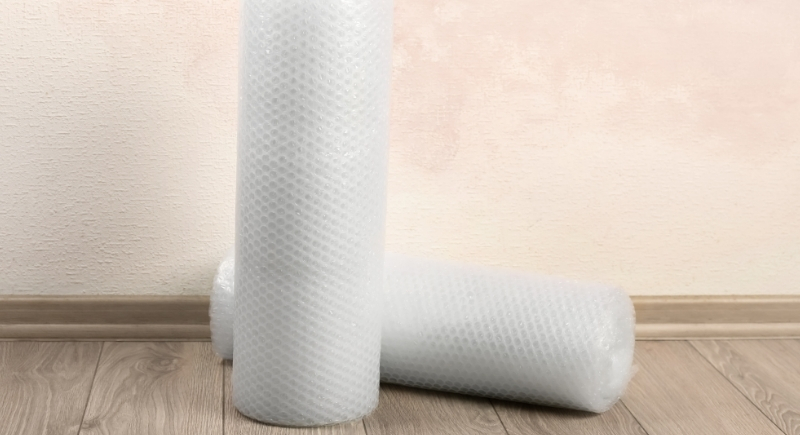
Image via Canva/Africa images
In 1957, Alfred Fielding and Marc Chavannes were focused on home design. Plastic was gaining popularity as a modern material, and the two inventors believed it could transform wallpaper. Their goal was to create a textured, futuristic wall covering.
To test the idea, they ran two plastic shower curtains through a heat-sealing machine. The result was unexpected. Air became trapped between the layers and formed a sheet filled with evenly spaced bubbles. The material was lightweight, translucent, and unlike anything else on the market.
As wallpaper, however, it was a complete miss. Consumers had no interest in covering their walls with inflated plastic.
Not Quite Insulation Either
Rather than discard the material, Fielding and Chavannes tried to reframe its purpose. One early idea was greenhouse insulation. The air pockets trapped heat, which seemed promising in theory. Bubble Wrap was tested in agricultural settings, but the idea stalled quickly. Existing insulation options were cheaper and easier to install.
For several years, Bubble Wrap existed without a clear identity. It worked as a material, but no one had figured out what problem it truly solved.
The Moment Packaging Finally Made Sense
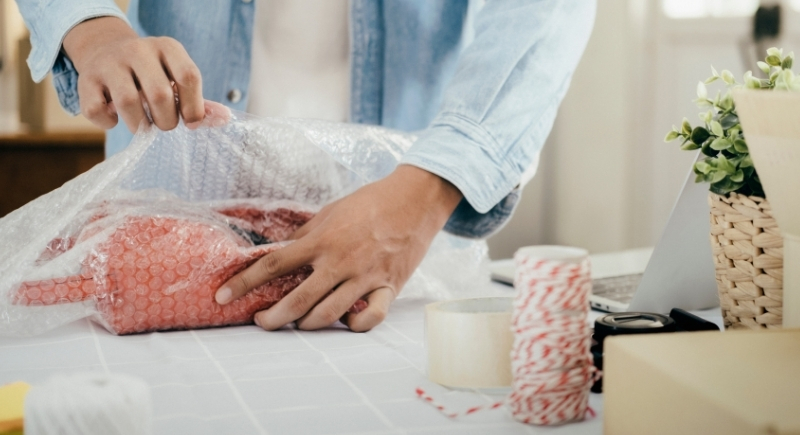
Image via Canva/iJeab
The breakthrough came when attention shifted away from walls and buildings and toward objects in motion. The same air pockets that failed as décor turned out to be excellent shock absorbers. The plastic sheets were light, flexible, and easy to wrap around irregular shapes.
This realization arrived at the right moment. In the late 1950s and early 1960s, companies were beginning to ship fragile electronics that could not withstand rough handling. IBM’s early computers, including the IBM 1401, were delicate and expensive. Bubble Wrap provided real cushioning without significant added weight.
Once it proved itself during transport, Bubble Wrap finally found its purpose. Fielding and Chavannes founded Sealed Air in 1960, and the product quickly evolved into different bubble sizes, thicknesses, and formats designed specifically for shipping.
The Accidental Joy of Popping
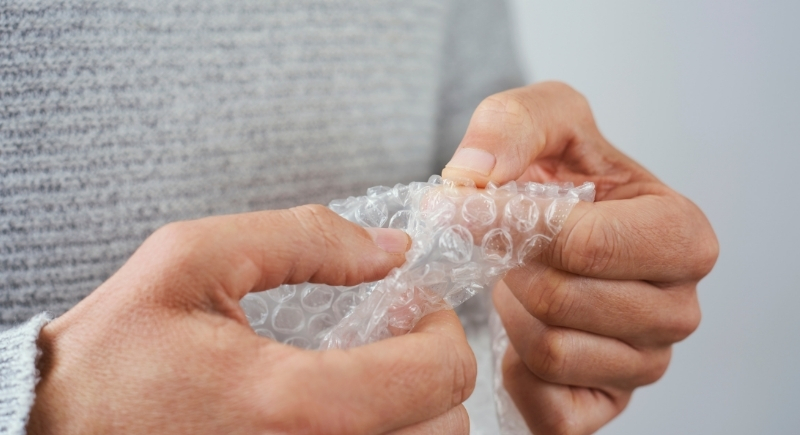
Image via Canva/Juan Moyano
One of Bubble Wrap’s most famous qualities was never planned. The urge to pop the bubbles emerged organically. The first known person to do it for fun was Howard Fielding, the young son of Alfred Fielding, who instinctively squeezed the material and discovered the satisfying snap. The reaction turned out to be nearly universal.
Soon, Bubble Wrap became associated with stress relief, anticipation, and play. It inspired novelty toys, digital apps, and even an annual appreciation day, none of which were part of the original vision.
How Bubble Wrap Is Made Today
Modern Bubble Wrap looks simple, but its production is highly controlled.
Polyethylene plastic resin is melted at high temperatures, formed into thin films, and fed through rollers with small holes that force air into uniform pockets. A second layer seals the bubbles in place, and the material is cut, perforated, and rolled for distribution.
The product is used in more than 100 countries and protects billions of dollars’ worth of goods each year. Variations now include different bubble sizes, anti-static versions, and inflatable formats that reduce shipping volume before use.