You Have Been Eating Rice Wrong Your Whole Life, According to an Etiquette Coachx
Eating something as basic as rice feels instinctive for most people. In the United States, many diners reach for a fork or a spoon without giving it much thought, while in large parts of Asia, chopsticks are the natural choice. These habits are shaped by culture, tradition, and daily routine rather than conscious decision-making. Most people rarely pause to consider whether there is a “correct” way to eat such a familiar food at all.
That assumption was recently challenged by a viral social media video from British etiquette coach William Hanson, which reignited a dinner-table debate about how rice is eaten in formal settings. The short clip, shared widely online, shows Hanson demonstrating how rice is handled under traditional British dining etiquette when both a fork and knife are in use.
The Etiquette Rule That Sparked Attention
In the video, William Hanson explains that when a fork is paired with a knife in British dining etiquette, the fork remains facing downward. Turning it over to scoop food is avoided.
Instead, the knife is used to guide small portions of rice onto the back of the fork, in the same way it is often used to assist with foods like peas. Hanson demonstrates this method by pushing a small amount of rice onto the back of his fork before taking a bite.
The video quickly went viral, with many viewers expressing surprise or disbelief. Comments ranged from lighthearted jokes about how long it would take to finish a plate of rice to questions about why a spoon was not used. Others pointed out that the advice was specific to British etiquette and not intended to apply to everyday meals or other cultures.
Why The Method Feels Unfamiliar
For many people, the method felt unfamiliar because rice is commonly eaten in much more practical ways around the world. In casual dining, a spoon is often preferred for rice because it allows loose grains to be gathered easily.
In many Asian countries, rice is eaten with chopsticks, often with the bowl lifted closer to the mouth to prevent grains from falling. Some South Asian, African, and Middle Eastern cultures traditionally eat rice with the hands, using practiced techniques that usually involve the fingertips to gather and lightly press the rice before eating. It is said to emphasize control and connection to the food.
Even within the United Kingdom, the fork-and-knife approach to eating rice is rarely used outside of formal dining environments. The reaction to Hanson’s video reflected this gap between formal etiquette and everyday habits.
Many viewers interpreted the demonstration through the lens of daily meals, where efficiency and comfort tend to matter more than adherence to traditional dining conventions. Rice is often paired with beans, stews, or sauces, and the choice of utensil reflects the texture and consistency of the meal.
The method Hanson demonstrated is not meant to dictate how people should eat rice in general. It applies only in formal British dining situations where traditional etiquette is expected, such as structured meals with multiple courses and established table settings. It does not extend to informal gatherings, home meals, or cuisines with their own long-standing customs.
The Right Way To Eat Rice
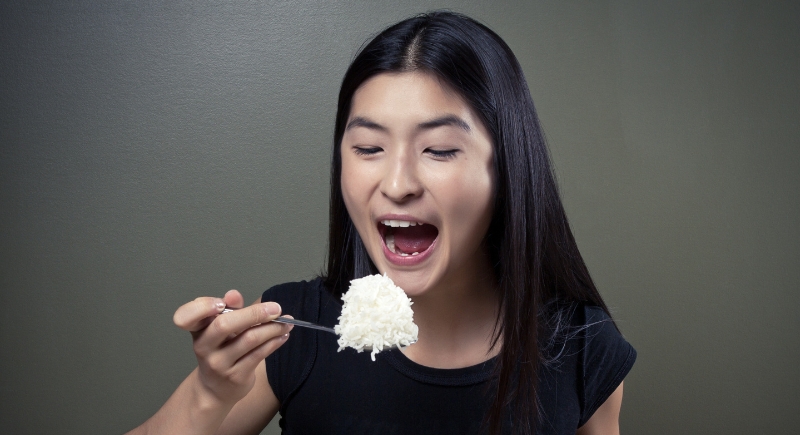
Image via Getty Images/So-CoAddict
The wide range of practices shows that there is no single “correct” way to eat rice. Each culture has developed its own approach, shaped by history, available tools, and social customs. The differences may seem small, but they show how meaningful even the simplest foods can be.
In the end, manners are about understanding context and showing consideration for others at the table. The viral video demonstrates how formal etiquette can look unfamiliar when removed from its intended setting. Knowing these rules does not require following them in daily life.