Why Some Popular Fruits Are Not Actually Berries at All
Botanists don’t care about size, sweetness, or how easy something is to snack on. They care about structure. A true berry develops from a single flower with one ovary. It also has three fleshy layers: the outer skin, the soft middle, and the inner part that holds the seeds. Fruits that meet these three conditions qualify as berries, even if they don’t match what most people imagine.
Bananas check every box. So do grapes, tomatoes, eggplants, and peppers. Even citrus fruits like oranges fall into a subtype called hesperidium because they share that same basic structure. Seeds are also important because a berry usually contains two or more seeds embedded inside the flesh. That alone knocks a few familiar fruits out of the category.
The Fruits Everyone Gets Wrong
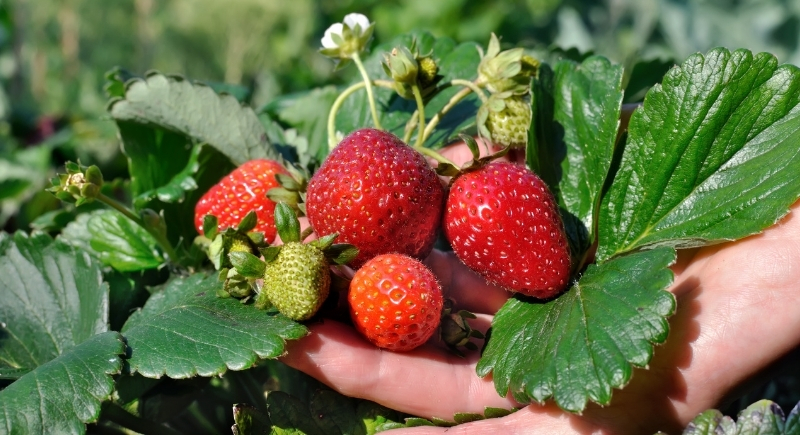
Image via Getty Images/YuriyS
Strawberries are at the center of the confusion. They look like textbook examples of berries, but they grow from multiple parts of a flower, not a single ovary. That places them in a group called aggregate fruits.
Raspberries and blackberries miss the mark for a different reason. Each one forms from many small units, and each unit comes from its own ovary. Botanists call these aggregate fruits. The tiny segments you see on a raspberry each carry their own seed, which explains the texture.
Cherries fall short as well, even though they seem closer to the definition. They contain a single seed within a hard pit, which classifies them as drupes. These distinctions sound technical, but they all connect back to how the fruit develops on the plant.
The Fruits That Qualify
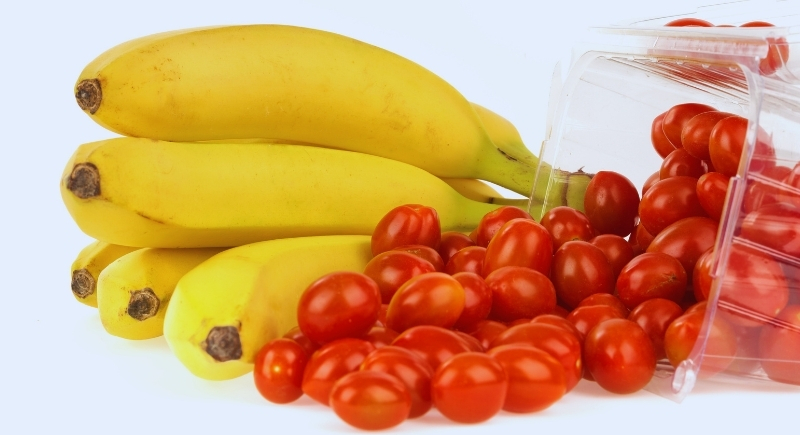
Image via Getty Images/asikkk
Bananas are berries. So are tomatoes, which have been argued over for more than a century, including a 1893 United States Supreme Court case that labeled them vegetables for tax purposes. Botanically, though, they still qualify as berries.
Grapes, kiwis, avocados, cranberries, and bell peppers all meet the criteria, too. Even cucumbers and eggplants make the cut. Watermelon is close to the line as it belongs to a specialized group called pepo, which shares many berry traits but has a thicker rind. Citrus fruits like lemons and oranges also qualify, with their segmented interiors placing them in that hesperidium subgroup.
Essentially, if a fruit develops from one ovary and has a layered, seed-filled structure, it counts as a berry.
Why Classification Still Feels Messy
Plant classification is based on how plants reproduce and spread their seeds. Fleshy fruits exist to attract animals, which then carry seeds elsewhere. That process led to many different fruit structures, all solving the same problem in slightly different ways.
Scientists have been trying to organize those differences for centuries, and even they admit the system can feel chaotic at times. The natural world doesn’t follow simple labels, and fruit is a perfect example. That’s why the word “berry” keeps pulling in two directions. One side sticks with tradition and everyday use, while the other follows strict botanical rules.