Why People Eat 12 Grapes at Midnight on New Year’s Eve
People all over the world mark the New Year with rituals meant to tip the odds in their favor. In Spain and increasingly far beyond it, one ritual involves a bowl of grapes, a ticking clock, and a race against twelve chimes. The playful, even chaotic custom has a surprisingly practical origin that explains why it has lasted for more than a century.
A Midnight Tradition With a Tight Deadline

Image via Pexels/Alexas Fotos
As the clock strikes midnight on New Year’s Eve, participants eat one grape for each chime. Finishing all the grapes before the final chime fades means that the year ahead will bring good fortune. If you miss one, that specific month may come with challenges.
In Spain, this ritual is known as uvas de la suerte, or lucky grapes. It is commonly performed at home, in town squares, or in front of televised clock towers, with Madrid’s Puerta del Sol serving as the most famous gathering point.
Where the Custom Came From
The grape ritual dates back to the late 1800s, with early records indicating its origin in Madrid. One explanation ties it to upper-class celebrations inspired by French New Year customs, where grapes and champagne were part of the evening. The tradition was established a few decades later in the early 1900s when grape growers in Alicante experienced an unusually large harvest. With more grapes than the market could easily absorb, producers promoted the idea of eating twelve grapes at midnight as a symbol of luck and prosperity. The idea caught on quickly. Over time, the clever sales push turned into a national custom.
What Each Grape Represents
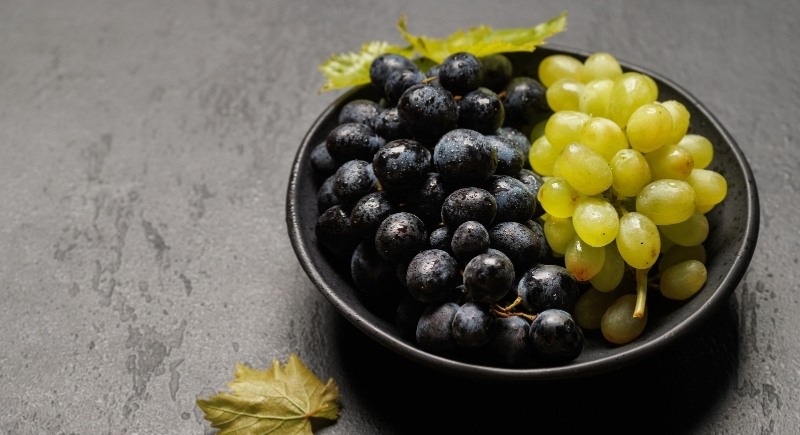
Image via Canva/Evgeny Karandaev
Some people take the symbolism a step further by paying attention to the distinct flavors of each grape. A sweet grape suggests a positive month ahead, while a sour one hints at possible difficulties. Others focus on intention instead, assigning hopes related to health, work, finances, or relationships as they eat each grape.
Social media has added its own spin to the tradition. Videos often show people eating the grapes while sitting under a table, usually with captions promising love or romance in the coming year. This element does not come from the original Spanish custom.
The under-the-table variation is linked to Latin American folklore and modern internet storytelling. While it has gained popularity online, especially on TikTok, the traditional ritual only requires grapes and the midnight chimes. Everything else is optional.
Why You See Special Grape Packs Now
As interest in the tradition spreads beyond Spain, retailers have adapted. Supermarkets now sell small packs containing exactly twelve grapes, sometimes peeled or seeded for convenience.
Certain varieties, such as Aledo grapes, are often associated with the ritual in Spain because of their sweetness and thin skins. Outside Spain, most people simply choose seedless green grapes that are easy to eat quickly.