This Restaurant Gets Your Order Wrong on Purpose and It Is the Sweetest Place on Earth
In Tokyo, there is a restaurant where accuracy is not the goal. Guests place their orders as usual, but the dishes that arrive may not match what was requested. A bowl of dumplings might replace ramen. Coffee may come with a straw. These outcomes are not accidents to be corrected. They are part of the design.
The concept is called The Restaurant of Mistaken Orders, a dining project first launched in 2017. Its defining feature is that the waitstaff are people living with dementia. Because memory loss and confusion are part of their daily reality, mistakes are expected. Rather than conceal that fact, the restaurant makes it clear from the start.
Before being seated, diners are informed that orders may come out wrong. No refunds are promised for errors, and no apologies are required from staff.
How the Restaurant Works
Service itself follows a familiar rhythm. Guests choose from a regular menu, place their orders, and interact with servers throughout the meal. Once food is delivered, it is treated as final, even if it does not match what was requested. The emphasis stays on the interaction, not the accuracy.
The restaurant operates as a temporary pop-up instead of a permanent space. Events take place in Tokyo and other parts of Japan, often through partnerships with existing restaurants, local governments, or cultural institutions. While locations vary, the approach remains consistent.
Behind the scenes, careful planning keeps everything running smoothly. Tasks are simplified, menus are designed to reduce confusion, and support staff remain nearby when needed. What looks unstructured at the table is supported by quiet preparation in the background.
Where the Idea Came From
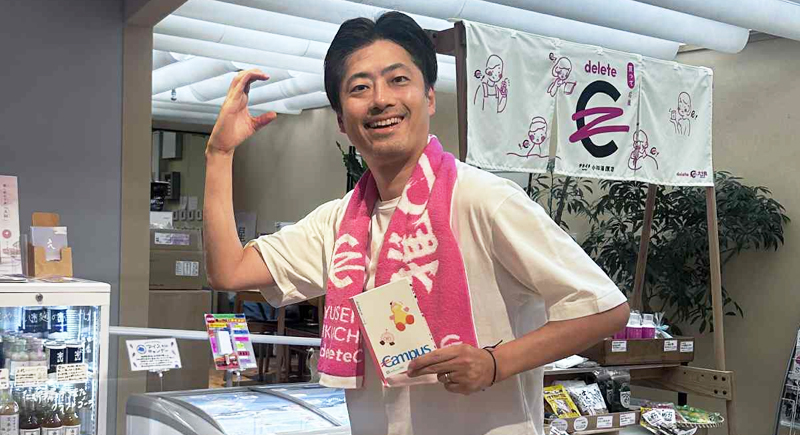
Image via Facebook/Shiro Oguni
Shiro Oguni, a Japanese television director, created the project. The idea emerged after he spent time visiting a group home for people with dementia. He observed that residents could cook, clean, shop, and carry out daily tasks, even if they sometimes lost track of steps or details.
His observation became the basis for the restaurant. Instead of framing dementia solely as decline, the project focuses on what remains possible. The restaurant’s name is deliberately direct. There is no attempt to soften the premise or present it as novelty dining. The title explains exactly what will happen.
What Diners See at the Table
During service, interactions unfold at a different pace than in a conventional restaurant. A server may seat guests and then join them at the table. Another may struggle with a pepper grinder. Someone might forget where they were headed and pause in the middle of the task. These moments are not hidden or redirected.
Guests frequently assist with small tasks, such as helping pass plates or clarifying seating. The structure allows staff and diners to share responsibility for completing the meal. The result is a dining experience where coordination replaces efficiency.
Importantly, the restaurant does not invite laughter at the staff. Organizers have consistently stated that the point is not whether an order is right or wrong, but how people respond to the difference.
Public Response and Recognition

Image via Canva/pocstock
Since its launch, The Restaurant of Mistaken Orders has drawn attention from Japanese and international media, as well as cultural and government institutions. The project has been featured in coverage related to aging populations and dementia awareness, particularly in Japan, where demographic shifts have made cognitive decline a widespread social issue.
In 2019, the project received multiple international awards, including a Silver Lion at the Cannes Lions festival in the Design category. It has also been recognized at Spikes Asia, the ACC Tokyo Creativity Awards, and other global advertising and design competitions.
The initiative has also partnered with the Japanese Ministry of Health, Labour and Welfare for one-day restaurant events, employing people with dementia under formal contracts to serve ministry employees.
A Different Measure of Service
The Restaurant of Mistaken Orders does not attempt to scale into a franchise or permanent chain. Its organizers have stated that the project functions best as a temporary experience. What the restaurant offers is limited but specific. It demonstrates that people living with dementia can work, interact, and contribute in public-facing roles when environments are designed to accommodate them.
It also shows how small adjustments in expectations can change the tone of everyday exchanges. In a service industry built around speed, accuracy, and standardization, this restaurant operates by different rules.