There Is a Cave in Missouri That Currently Stores 1.4 Billion Pounds of Cheese
Federal storage records and industry data show that the United States is holding roughly 1.4 billion pounds of surplus cheese. A significant portion of that supply is stored underground in Missouri, inside former limestone mines converted into climate-stable storage facilities. These sites were selected for practical reasons tied to cost, temperature control, and sheer capacity. The circumstances that led to this scale of storage developed gradually through agricultural policy, production incentives, shifts in dairy consumption, and a growing long chain of decisions.
The roots of the surplus trace back to dairy price protections that locked in minimum payments for farmers. Once those guarantees were in place, milk production increased because the risk decreased. During the late 1970s, inflation hammered farm operations, and the federal government responded with aggressive support. Under Jimmy Carter, billions of dollars flowed into the dairy sector. Farmers produced more milk, and the government bought what the market did not absorb.
Milk spoils quickly, so excess supply was converted to longer-lasting forms. Cheese solved that problem neatly because it stacked well, lasted longer, and fit neatly into bulk storage plans. By the early 1980s, federal inventories crossed 500 million pounds and kept rising.
Why Missouri Went Underground
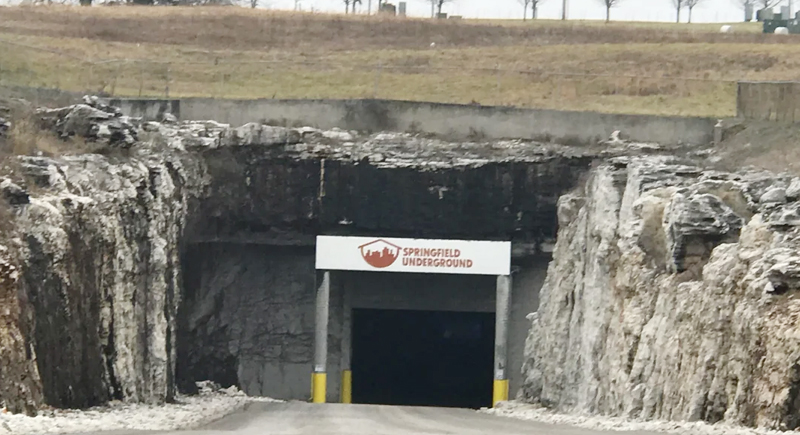
Image via Reddit/Troubador222
Storage became the next bottleneck. Above-ground warehouses filled quickly and cost serious money to cool. Missouri offered a strange but efficient answer. Decades of limestone mining had left vast underground chambers that stayed cool year-round. Temperatures hovered near 36 degrees Fahrenheit, requiring little energy.
Facilities like Springfield Underground and SubTropolis provided millions of square feet below the surface. Cheese barrels, butter, and powdered milk moved into those caverns by the truckload. By the mid-1980s, Kansas City alone held more than 160 million pounds of dairy products underground.
Cheese Became A Political Problem

Image via Canva/Aflo Images
The surplus shifted into public view during the early 1980s. In 1981, Agriculture Secretary John R. Block held up a moldy five-pound block at the White House to make a point about storage costs and spoilage. Lawmakers argued openly about waste, subsidies, and optics.
Under Ronald Reagan, distribution replaced storage as the preferred solution. The Temporary Emergency Food Assistance Program sent millions of five-pound blocks to food banks and community centers. The cheese helped families during a recession and also became a cultural marker that persisted long after the program scaled back.
The Caves Did Not Empty Out
The distribution reduced pressure but did not solve the underlying math. Production stayed high, and consumption drifted lower. By 2017, per capita milk consumption had dropped to about 149 pounds per year, down sharply from the 1970s. Production kept climbing, rising by more than 10 percent since 2010.
Trade disputes, export slowdowns, and continued price supports pushed inventories back up. By 2019, total cheese stockpiles reached about 1.4 billion pounds nationwide, and a meaningful share of that supply returned underground.
Who Uses The Caves Today
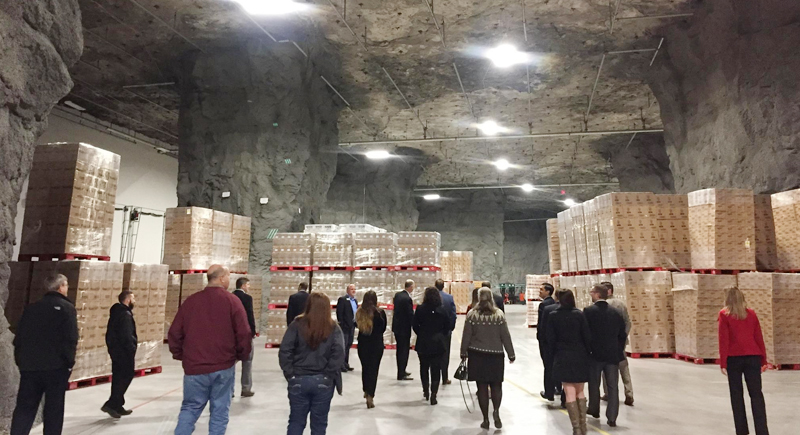
Image via Facebook/Springfield Underground
The federal government still owns cheese, mainly routed into school lunch programs, food assistance, and military supply chains, but it no longer controls most of the storage space. Private food companies lease large portions of the Missouri caves to age cheese and hold inventory.
The underground environment cuts refrigeration costs and offers stable conditions that warehouses struggle to match. Brands such as Kraft Heinz rely on these facilities to manage volume. The caves function less as industrial real estate that happens to exist beneath farmland and highways.