The Viral Dubai Chocolate Bar Just Inspired a Chewy Pistachio Treat
A pistachio-filled chocolate bar created in Dubai more than two years ago led to long lines, resale markups, and endless social media recreations. In late 2025, the same flavor formula sparked another craze thousands of miles away, when South Korean bakeries turned it into a large, chewy pistachio-and-chocolate dessert. The demand pushed pistachio prices up by about 20 percent in some supermarkets.
The trend spread quickly. Within months, about 1.8 million of these Dubai-style pistachio cookies were sold through a single convenience store chain. The flavor combination that first made the chocolate bar famous simply took a new form, and the cookie version became the latest viral dessert.
A Chocolate Bar Started It All
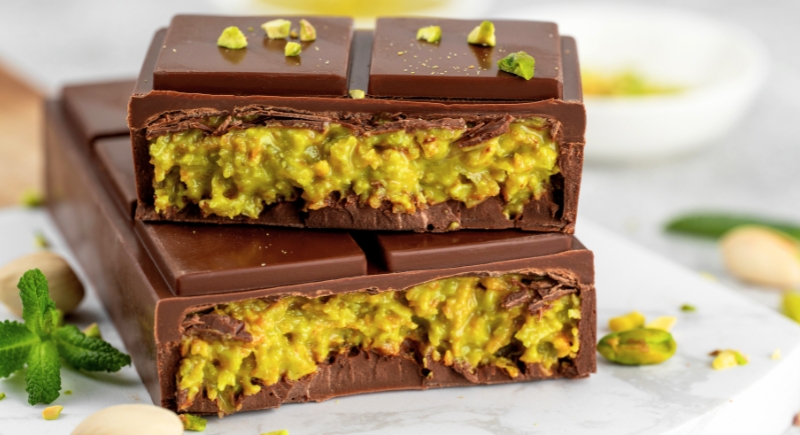
Image via Canva/IRYNA TATSKOVA f
The now-famous Dubai chocolate bar came out of Fix Dessert Chocolatier in Dubai and built its reputation on contrast. It features a glossy chocolate shell that holds gooey pistachio cream and crisp kataifi pastry, sometimes paired with tahini for extra depth. The mix of creamy and crunchy textures made it prime social media material, and the bar spread well beyond the Middle East.
Grocery stores stocked copycats, home bakers started posting tutorials, and pistachio and chocolate became a pairing people actively searched for. The hype cooled down, but the flavor combination stuck around long enough to inspire something more.
Korea Reimagines the Formula
In Gimpo-si, South Korean pastry chef Kim Na-ra of Mond Cookie took that pistachio-kataifi center and built a new structure around it. Instead of a firm chocolate shell, the filling is placed inside a soft marshmallow coating dusted in cocoa powder. The result looks like a truffle, stretches like candy, and feels like a rice cake.
The interior keeps the important elements intact: toasted kataifi mixed with pistachio cream, tahini, and white chocolate. The white chocolate helps the filling hold its shape once chilled because the outer layer is pliable. Many viewers assume it’s mochi at first glance, but the chew actually comes from gently melted marshmallows blended with butter, cocoa powder, and milk powder.
The Post That Lit the Fuse
The dessert gained national attention in September 2025 after Jang Won-young of the K-pop group Ive shared a photo on Instagram. Demand surged almost immediately, and shops began selling hundreds within minutes of opening. Some stores imposed purchase limits to slow the rush.
Prices climbed to between 5,000 and 10,000 won, roughly $3 to $7. A major supermarket chain raised pistachio prices by 20 percent as supply tightened. A real-time online map began tracking which bakeries had stock available and how many pieces remained. Counterfeit versions surfaced, which led customers to call out imitations that skipped the kataifi or replaced the marshmallow shell.
Convenience store chain CU launched its own Dubai chewy rice cake in October 2025 and reported sales of about 1.8 million pieces within a few months. A company representative admitted production capacity could not keep pace. Even Starbucks Korea introduced a “Dubai chewy roll” in January.
Social Media Pushes It Further
Over the past two months, the cookie has moved beyond South Korea and into global TikTok feeds. Creators demonstrate how to toast kataifi in butter, mix it with pistachio cream and melted white chocolate, freeze the filling, then wrap each ball in warm marshmallow dough before dusting it with cocoa powder. The process requires patience but no baking, which makes it accessible.