The Most Unique McFlurry Flavors Released by McDonald’s
The McFlurry is the ultimate blank canvas for McDonald’s most ambitious—and occasionally bizarre—experiments. While its base recipe remains standardized, international markets have repeatedly adapted the dessert to align with local ingredients, seasonal calendars, and licensing opportunities, defined by a chaotic catalog of regional exclusives that defy expectations.
This is a look at the most unconventional and surprisingly creative McFlurry iterations that the chain has ever offered.
Chocolate Banana Pikachu McFlurry (Japan)
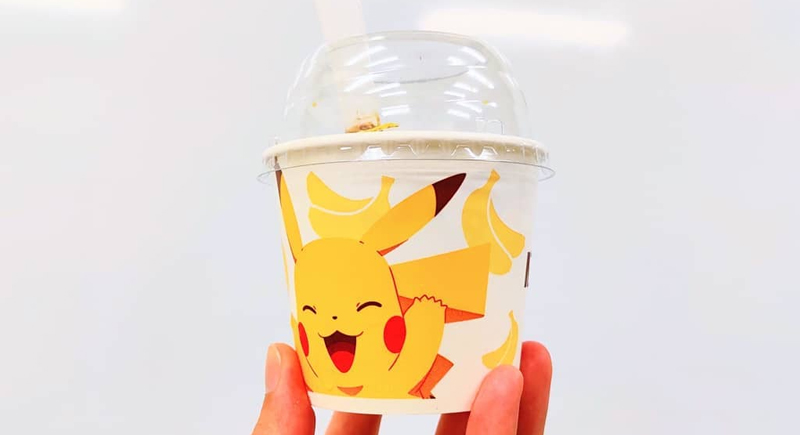
Image via Facebook/Tokyo Tales
Released as part of a Pokémon collaboration, this McFlurry combined banana-flavored custard-style soft serve with chocolate pieces and was served in a Pikachu-themed cup. The packaging was a central component of the release, consistent with Japan’s established use of collectible branding in food promotions. The product’s visibility extended beyond its availability window through promotional imagery and packaging reuse.
Stroopwafel McFlurry (Netherlands)
This McFlurry translated a traditional Dutch dessert into frozen form. Caramel-filled waffle pieces were incorporated into vanilla soft serve to preserve the defining elements of stroopwafel without altering its flavor profile. The approach emphasized fidelity to the original dessert.
Cotton Candy McFlurry (Canada)
Color played a defining role in this release. The cotton candy–flavored soft serve was dyed a bright blue. Cookie pieces were included for contrast, but the visual presentation remained the most distinguishing feature. The product appeared in limited markets and later returned briefly.
Red Bean McFlurry (China)
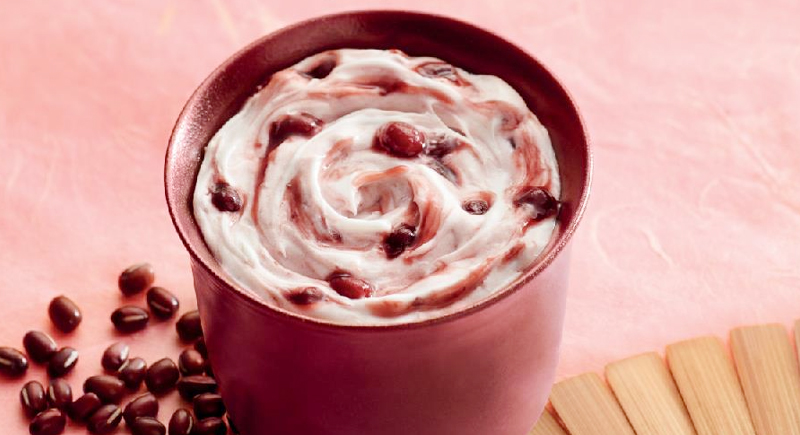
Image via Facebook/McDonald’s Brunei
Red bean paste, a common ingredient in Chinese desserts, was incorporated into vanilla soft serve with minimal modification. The resulting flavor aligned closely with established regional dessert profiles. The McFlurry functioned as a localized adaptation using an ingredient already familiar within the market.
Cadbury Creme Egg McFlurry (United Kingdom)
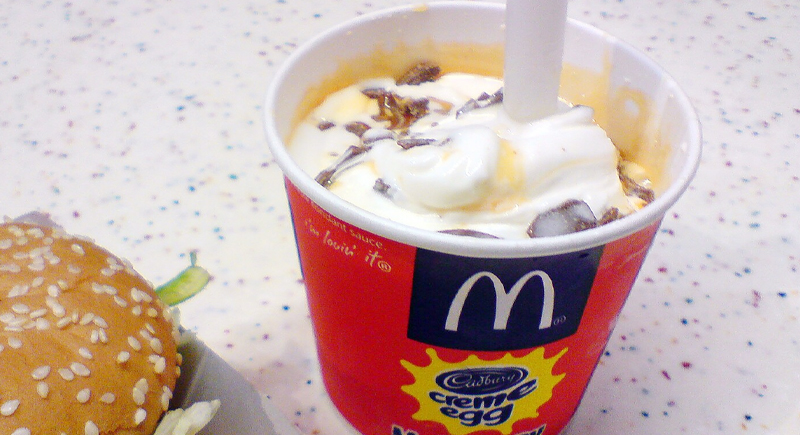
Image via Wikimedia Commons/Magnus D from London, United Kingdom
This McFlurry became a recurring seasonal release tied to the Easter holiday. Each annual appearance featured pieces of Cadbury chocolate shell and fondant mixed into vanilla soft serve. Its repeated timing established it as a calendar-based item.
Biscoff McFlurry (Europe and the Middle East)
The Biscoff McFlurry leveraged an ingredient that was already widely distributed across multiple regions. Cookie butter and caramelized biscuit crumbs were blended into vanilla soft serve. The release benefited from existing brand recognition.
Tres Leches McFlurry (Colombia)
This McFlurry incorporated milk-soaked cake pieces and dulce de leche directly into the soft serve. The resulting texture was denser and more layered than typical McFlurry releases. Its composition reflected the structure of the original dessert.
Bubblegum Squash McFlurry (Australia)
This McFlurry featured bubblegum-flavored syrup and mini marshmallows. Its formulation differed sharply from more traditional dessert flavors used in other markets. The release became notable within McDonald’s regional lineup.
Matcha McFlurry (Japan)
Matcha, already widely used in Japanese desserts, served as the defining flavor for this McFlurry. The green tea profile remained balanced and restrained.
Hot Chocolate McFlurry (Holiday Editions in Europe)
Released during winter months, this McFlurry combined chocolate sauce, vanilla soft serve, and marshmallows to reflect the flavors associated with hot chocolate. Its availability was limited to colder seasons.