The Last McDonald’s Burger Sold in Iceland Was Cooked in 2009
In 2009, McDonald’s shut down all its locations in Iceland within days of announcing the decision. The closure followed the country’s financial collapse and a sharp drop in the value of the Icelandic króna, which made the chain’s import-heavy supply model too expensive to sustain. A day before the closure, one customer placed a routine order, and that purchase would remain intact long after the restaurants disappeared.
A Closing That Moved Fast

Image via Wikimedia Commons/Hinrik
McDonald’s arrived in Iceland in 1993 with a grand opening ceremony, during which citizens watched as the Prime Minister at the time, Davíð Oddsson, took the first bite. However, 16 years later, the exit came with little warning, and in October 2009, the chain announced it would shut all locations within days. The reason was that after the 2008 financial collapse, the Icelandic króna lost roughly half its value. McDonald’s rules required imported ingredients, many of which were shipped from Germany. As costs surged, prices would have needed a steep hike to keep doors open, so the numbers did not work.
One Last Order
On the day before the closure, Hjörtur Smárason placed an order for a Big Mac and fries. The meal went home and stayed sealed in its bag. Years later, during a move, Smárason found it untouched in his garage. He opened the bag and saw a meal that looked much like it had the day it was sold. He did not plan a spectacle to announce this because he wanted to test a rumor about the durability of fast food. He briefly handed the meal to the National Museum of Iceland, where staff consulted a preservation specialist. The verdict suggested long-term care would be complex, so the burger moved on.
How a Meal Became a Stop on the Map
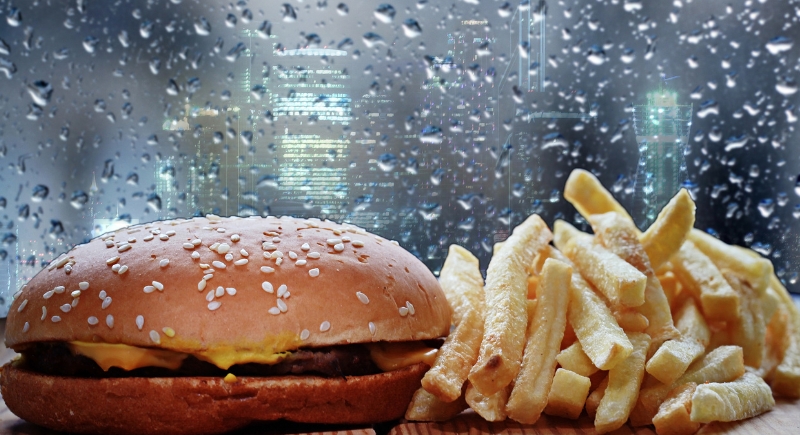
Image via Canva/Kichigin
Its next home turned out to be a better fit. The burger and fries landed at Snotra House, a small guesthouse in southern Iceland, and were placed in a casual setting. Interest grew on its own, and the guesthouse set up a livestream. View counts climbed into the hundreds of thousands, travelers planned detours, and screenshots circulated online.
Why This Still Piques Curiosity
The burger marks a shift in how Iceland tells its story. In the 1990s, hosting McDonald’s signaled participation in a shared global routine. After 2009, the absence began to support a different image. Visitors now discuss local hot dogs, greenhouse-grown tomatoes, and homegrown chains. Fast food did not vanish, but simply adapted. Metro replaced McDonald’s locations using local ingredients, even offering a familiar double patty option under a different name.
More than 15 years after it was cooked, the last McDonald’s burger sold in Iceland remains on display. It has moved locations, gained fans, and turned into an unofficial landmark.