The Insane Hustle That Invented the First Ice Cream Cone
Ice cream did not always come in a cone. Even up until the late 1800s, street vendors often served it in small reusable glass containers called “penny licks.” Customers would finish their portion and hand the glass back. The system worked, but it created two issues: hygiene concerns and slow service during busy periods.
At the same time, ice cream itself was becoming easier to access. The introduction of hand-cranked ice cream makers in 1843 and the expansion of ice distribution enabled more people to buy ice cream. Demand grew fast, and the serving method had to catch up. Vendors needed something cheap, disposable, and quick, and that pressure set off a wave of ideas that would eventually lead to the cone.
Early Cones Existed Before The Hustle Took Off

Image via Pexels/Karol D
The concept of edible containers did not start in the United States. European cooks had already experimented with wafers for centuries. An 1807 image of the Parisian Café Frascati shows what many historians consider the earliest visual hint of a cone-like treat.
By 1846, chef Charles Francatelli described “wafer-gauffres” shaped into small cornucopias and filled with ice cream as part of plated desserts. Later, in 1887, Agnes B. Marshall published a recipe for “Cornets with Cream,” instructing that the wafer shells could be filled with ice cream or flavored ices.
These were close to the modern cone in shape, but they were not designed for walking around. They were served on plates and eaten with utensils.
Italo Marchiony Tried To Fix It First

Image via Canva/RossHelen
The first serious attempt to turn that idea into a business came from Italo Marchiony, an Italian immigrant working in New York City. Around 1896, he began selling ice cream in edible dough containers. In 1903, he secured a patent for a machine that produced these containers.
His version looked more like a cup than a pointed cone, but it solved part of the problem. Customers could eat from the container rather than return glassware. Marchiony’s design showed that edible serving tools could work at scale, even if it was not yet the cone people recognize today.
The 1904 World’s Fair Turned Hustle Into Opportunity
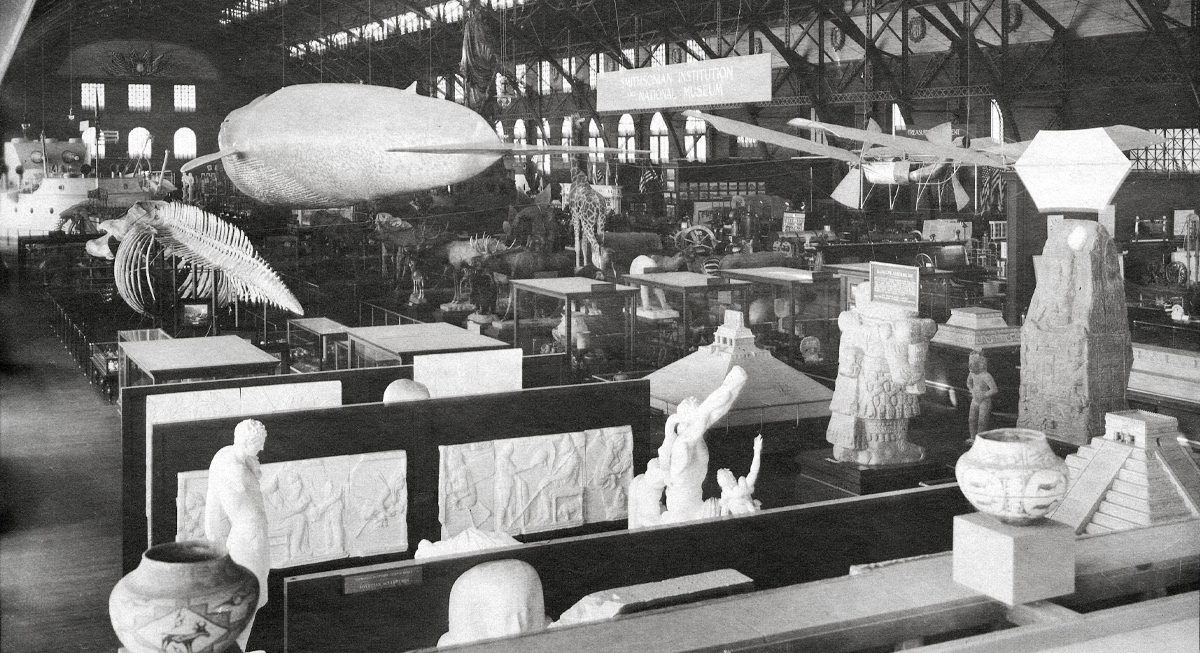
Image via Wikimedia Commons/Smithsonian Institution
The moment most people associate with the ice cream cone happened in 1904 at the St. Louis World’s Fair. Several vendors later claimed credit, which makes the story hard to pin down. The most widely told and unverified version centers on Ernest A. Hamwi, a Syrian concessionaire selling a crisp pastry called zalabia.
When a nearby ice cream vendor ran out of dishes, Hamwi rolled one of his waffles into a cone shape, let it cool, and handed it over as a quick fix. Other names also appear in competing claims, including Abe Doumar, Nick and Albert Kabbaz, David Avayou, and the Menches brothers. But there is no clear proof that one person invented the cone that day.
Business Took Over Right After
Once the concept caught on, it moved quickly into production. Stephen Sullivan began selling cones in Missouri in 1906. Hamwi went on to establish the Missouri Cone Company in 1910 to turn his idea into a formal business.
Manufacturing methods improved as well. Some cones were rolled by hand while still warm to form the familiar waffle style. Others were baked in molds to create sturdier shapes. By 1924, production had reached about 245 million cones.