The Controversy Behind “Fake” Olive Oil Sold in US Supermarkets
Olive oil prices hit record highs during recent global harvest shortages. At the same time, law enforcement agencies across Europe reported seizures of tens of thousands of liters of cooking oils falsely labeled. Investigators also dismantled criminal networks involved in food counterfeiting across dozens of countries. These events raised concern across food safety circles because a common pantry staple was suddenly included alongside organized crime, supply shortages, and public health warnings.
Why Olive Oil Became A Fraud Magnet
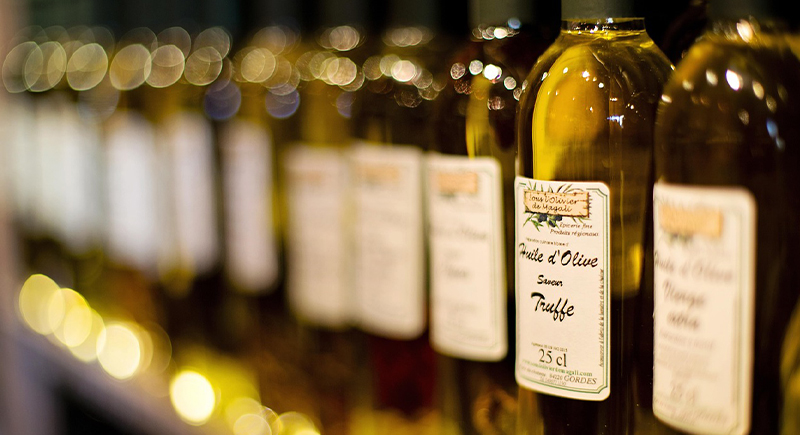
Image via Pixabay/JillWellington
When droughts and climate pressure hit major producing regions in recent years, the global olive oil supply tightened while demand remained strong. Higher prices made olive oil far more attractive to criminals who could stretch profit margins simply by mislabeling cheaper oils.
Recent enforcement actions highlight how serious the problem has become. Portuguese authorities seized more than 16,000 liters of cooking oil sold as olive oil, along with tens of thousands of counterfeit labels. A separate multinational investigation involving nearly 30 countries led to over 100 arrest warrants tied to counterfeit food networks, including adulterated olive oil.
Industry analysts also note retail pricing pressure plays a role. Some markets sell half-liter bottles between about €20 and €70, and that price gap creates a strong incentive for fraud schemes built around dilution or relabeling.
What “Fake” Olive Oil Actually Means
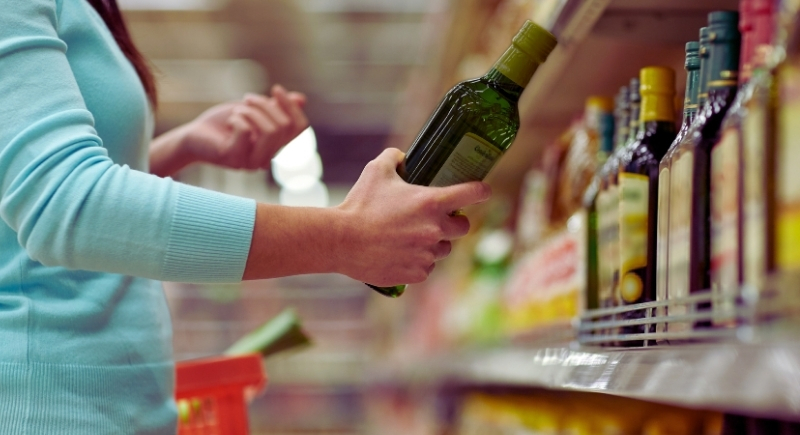
Image via Canva/Syda Productions
Most fraud does not involve completely synthetic oil. Instead, criminals often blend cheaper seed oils, such as soybean, sunflower, or canola, into real olive oil. Some operations add chlorophyll or carotenoids to mimic natural color, while more advanced schemes rely on refined olive oils stripped of odor and flavor, then sold as a higher-grade extra virgin.
Extra virgin olive oil must meet strict chemical standards, including acidity below 0.8 grams per 100 grams and mechanical extraction without chemical processing. Refined olive oils undergo heat or chemical treatment, which removes flavor compounds and polyphenols.
Why Detection Is Hard For Shoppers
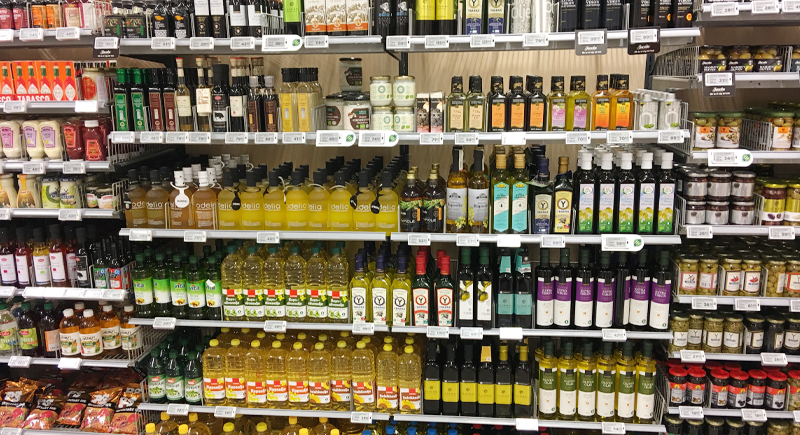
Image via Wikimedia Commons/Wolfmann
Modern fraud methods have become harder to detect without lab testing, and some altered oils can pass visual inspection and even basic taste tests. That explains why many home “tests” fail to identify adulteration.
Supply chains also complicate traceability because olive oil often moves through bulk brokers and blending facilities before bottling, which increases the distance between the farmer and the consumer at each step. When labels list only the broad country of origin rather than specific region or harvest details, verifying transparency becomes harder.
Regulators have tried to respond: the European Union introduced stricter conformity checks requiring regular testing and origin verification. Still, enforcement agencies admit sophisticated fraud can slip through when testing costs are high or detection methods lag behind new adulteration techniques.
American Supermarkets Are In The Spotlight
The United States ranks among the top olive oil markets outside the Mediterranean region. High demand, combined with weak oversight, increases reliance on imports.
Consumer awareness has improved, though confusion still exists around labeling terms such as extra virgin, light olive oil, and refined olive oil blends. Experts recommend checking the harvest date, the specific growing region, the olive variety, and realistic pricing relative to production costs.