McDonald’s isn’t a Burger Company; it’s a Real Estate Empire in Disguise.
McDonald’s posts more than $26 billion in annual revenue, operates in over 100 countries, and sits on a market cap north of $200 billion. Fast-food margins remain thin, labor costs continue to rise, and menus evolve in response to trends. Yet, this company continues to produce steady profits decade after decade. Something underneath the Golden Arches keeps the profits coming, even during slow sales cycles and shifting tastes. McDonald’s Corporation earns revenue through two channels: company-operated restaurants bring in sales directly, and franchise locations pay rent, royalties, and fees. It’s the second group that has the heavier share.
The Money Trail Starts With Control, Not Calories
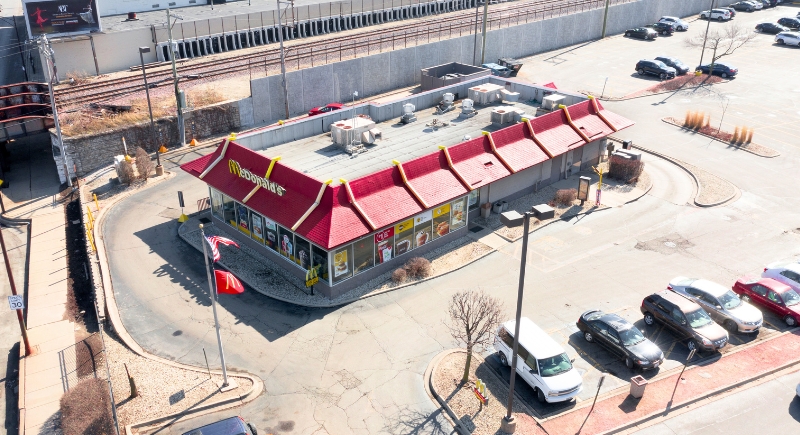
Image via iStockphoto/Joe Hendrickson
Roughly 85 percent of McDonald’s locations operate under franchise agreements. In most of those cases, the corporation owns the land, the building, or both. Franchisees are responsible for managing staff, equipment, utilities, and daily operations. In exchange, they pay monthly rent tied to sales plus royalties that typically hover around four to five percent of gross revenue.
This setup flips the usual restaurant risk model. The operator carries volatility tied to food costs and foot traffic. The corporation collects predictable income tied to property and brand access. Financial disclosures show the impact clearly. McDonald’s obtains approximately 82 percent of the revenue generated by franchise locations, compared to roughly 16 percent of the revenue generated by company-operated stores.
Ray Kroc Locked In the Advantage Early
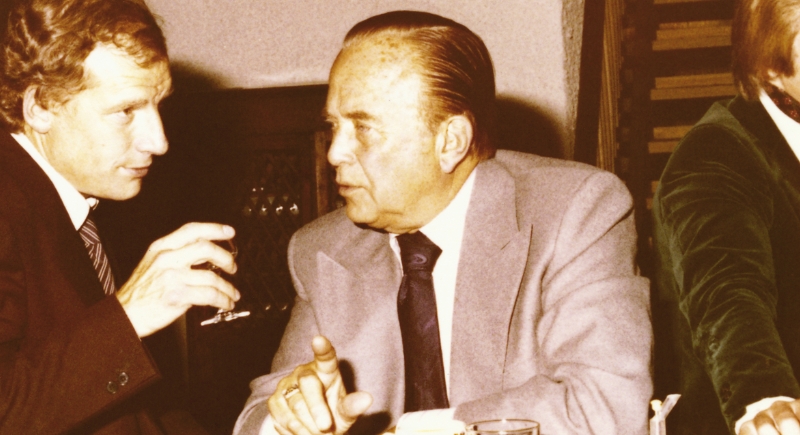
Image via Wikimedia Commons/Sigfried Rödig
During the company’s rapid expansion phase in the 1950s and 1960s, leadership recognized that brand growth alone would not ensure long-term stability. Control mattered more than speed. With the help of businessman Ray Kroc, McDonald’s began acquiring high-traffic properties along major roads and commercial corridors, then leasing those sites back to franchisees at a markup.
Over time, many leases turned into outright ownership. Once construction loans were paid off, rent flowed in with minimal overhead. The decision created leverage. Franchise agreements could end, but property ownership rarely does. Even if an operator leaves, the land remains valuable, often more useful than when purchased.
The Franchisee Math
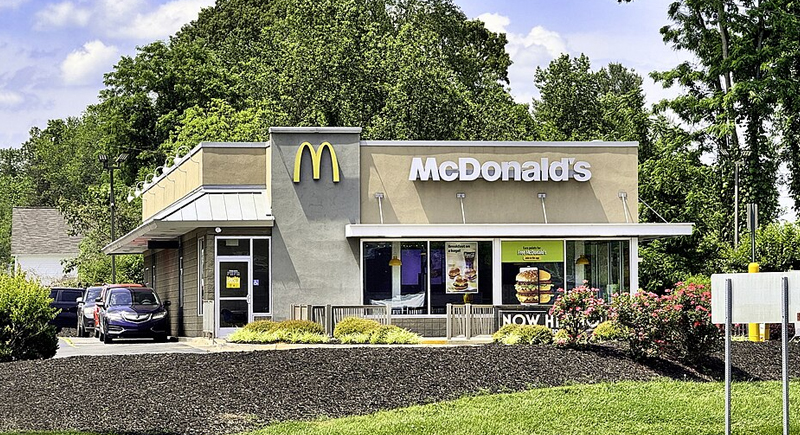
Image via Wikimedia Commons/Harrison Keely
A typical McDonald’s location generates about $2.7 million in annual sales. After food and paper costs, gross profit comes out to be nearly $1.7 million. Rent alone can consume around 22 percent of that figure. Payroll, marketing, insurance, and maintenance shrink margins further.
The average operating income for a franchisee is near $150K per year. The corporation collects rent and royalties regardless of how tight that margin feels. Multiply that structure across more than 36K locations, and the real business comes into focus. McDonald’s holds an estimated $30 billion to $40 billion in real estate assets tied to those stores. Annual profits tied to franchised locations reach into the billions.
Real Estate Brings Tax and Balance Sheet Muscle
Property ownership adds another layer of advantage. United States tax rules allow depreciation deductions on real estate, even as property values often rise. McDonald’s reported more than $1 billion in annual depreciation expenses in prior filings, reducing taxable income while holding appreciating assets.
Those assets also strengthen the balance sheet. Land and buildings provide collateral that supports borrowing at lower interest rates. Access to cheaper capital fuels renovations, acquisitions, and expansion without relying entirely on restaurant cash flow. When consumer habits shift or competition tightens, rent still arrives on schedule.