In the Netherlands, 750,000 Chocolate Sprinkle Sandwiches Are Consumed Daily
In most of the world, chocolate sprinkles are a decorative extra reserved for desserts. In the Netherlands, they are a daily staple known as hagelslag. An estimated 750,000 hagelslag sandwiches are eaten across the country every day. It can be found in school lunches, workdays, and household routines.
A “Hailstorm” on Bread
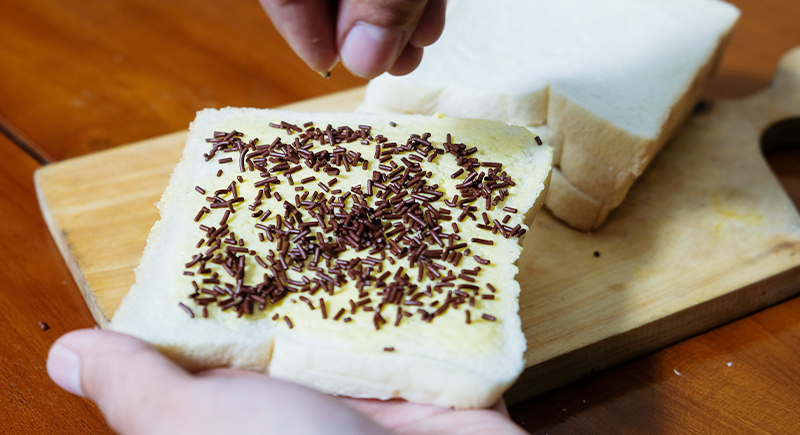
Image via iStockphoto/Nurma Agung Firmansyah
The word hagelslag literally translates to “hailstorm,” an apt description for the way these small, oblong chocolate granules are liberally showered over buttered bread or rusks. The Dutch consume more than 14 million kilograms of the stuff every year, with variations ranging from dark (puur) and milk chocolate to white chocolate and fruit-flavoured versions.
While the concept might seem anachronistic in an era defined by “sugar awareness,” for the Dutch, hagelslag is an untouchable “simple pleasure.” As one observer noted, the Dutch simply do not over-analyse the health implications; they are too busy indulging in a ritual that spans generations.
The Industrial Heart of the “Hail”
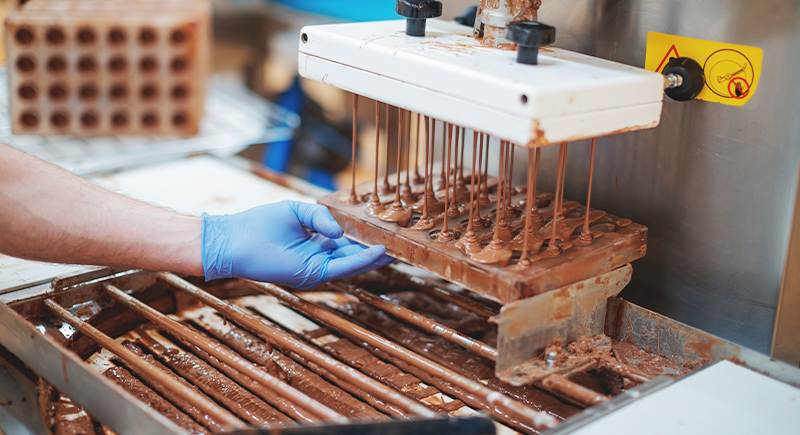
Image via iStockphoto/zoranm
This national obsession is fuelled by an industrial scale that is anything but “simple.” In the city of Tilburg, near the Belgian border, lies the world’s largest hagelslag factory. Inside, the process is described as a “kind of indoor rollercoaster” where vast conveyor belts move the chocolate through different stages of preparation.
The sprinkles are created through an extrusion process, where long strings of chocolate are cut to size and then sprayed with a fine mist of sugar to give them their signature glossy sheen. The sheer volume produced is staggering; the sound of the sprinkles being emptied from silos has been compared to the roar of 2,000kg (about 4,400 pounds) of rice hitting a bucket.
A Century of Tradition
The history of these sugary toppings is a competitive one. While aniseed-based toppings (known as muisjes) date back to the late 19th century, hagelslag as we know it was reportedly invented in 1919 by B.E. Dieperink, the director of the liquorice company Venco.
However, chocolate versions weren’t released until later; the company Venz has been mass-producing chocolate hagelslag since 1936, while Venco followed with a chocolate version in 1951.
The brand De Ruijter is perhaps the most prestigious name in the industry. They received a royal predicate in 1985—an honour reserved for Dutch companies of national importance that are at least a century old.
The Nostalgic “Bite”
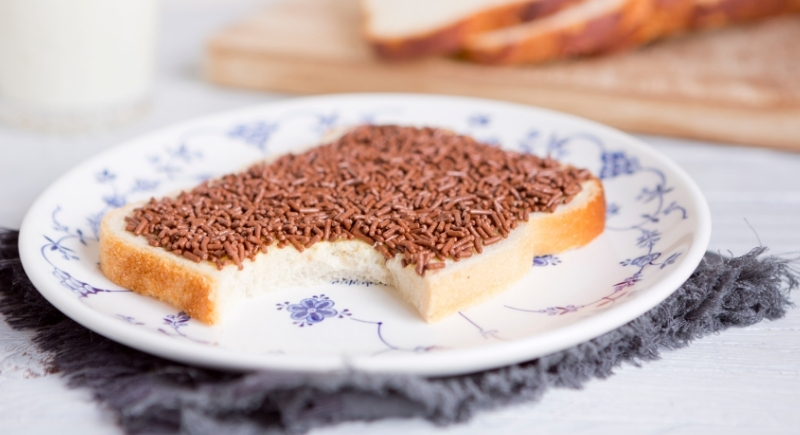
Image via Getty Images/sara_winter
For the Dutch, the appeal of a broodje hagelslag (hagelslag sandwich) is rooted in nostalgia. It is often described as the one childhood indulgence that adults are still “allowed” to enjoy without judgment.
There is even a specific ritual to its preparation: a liberal layer of butter is essential to provide the “glue,” and the sprinkles must be distributed evenly to the very edges of the bread.
This connection remains strong even when the Dutch leave home. Expats are known to ration packets sent by parents or return from visits with bag-loads of sprinkles.