How to Wash Cucumbers to Remove Dirt and Pesticides, According to Experts
Cucumbers often look clean enough to eat straight from the fridge, but experts say their smooth green skins can hide more than meets the eye. Dirt, bacteria from handling, wax coatings, and trace pesticide residues tend to settle on the surface. Since the skin is where most of that buildup collects, how you wash cucumbers plays a meaningful role in food safety.
Fortunately, experts agree that effective cleaning does not require specialty products or complicated routines. A few well-established practices are enough to make cucumbers safe and ready to use.
Running Water Matters More Than You Think
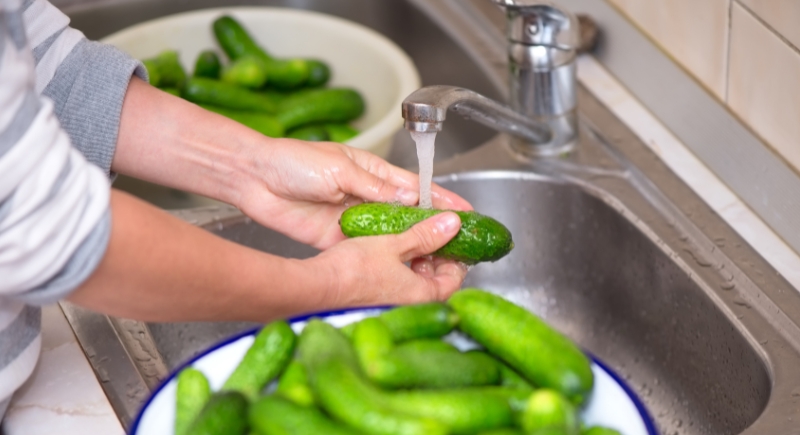
Image via Getty Images/ArtShotPhoto
Food safety specialists consistently recommend washing cucumbers under cool, running water as the most reliable first step. Holding the cucumber beneath a steady stream while gently rubbing the surface with your hands helps loosen dirt and residue that may not be visible.
This combination of water pressure and friction removes more contaminants than a quick rinse or a soak in standing water, which can allow residue to resettle on the skin.
A brief pass under the faucet helps, but experts advise spending closer to a full minute rinsing and rubbing the cucumber to ensure better coverage, especially if it will be eaten with the peel intact.
The Role Of A Vegetable Brush and Baking Soda
Many cucumbers are coated with a thin layer of food-grade wax to slow moisture loss during transport and storage. While safe, that coating can trap dirt and pesticide residue. Using a soft vegetable brush adds gentle abrasion that hands alone cannot provide.
Brushing the cucumber while it is under running water helps dislodge residue from the waxy surface. Paying attention to the stem and blossom ends is particularly important, as these areas tend to collect more debris.
For those who want to take cleaning a step further, some experts point to baking soda as a helpful option. Studies suggest that baking soda can break down certain surface-level pesticide residues more effectively than water alone.
The method involves dissolving baking soda in water, briefly soaking the cucumber, and then rinsing thoroughly under running water.
It works best as an added measure but is not a replacement for rinsing and scrubbing. Proper rinsing afterward is still necessary to remove any remaining baking soda and loosened residue.
Why Soap And Produce Washes Are Not Recommended
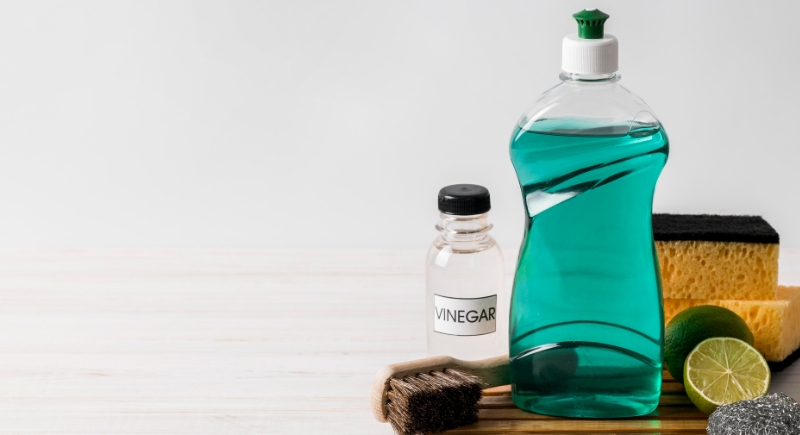
Image via Canva/Alberto Dima’s Images
Despite their popularity, soaps and commercial produce washes are not advised for cucumbers. The skin is porous enough to absorb residues from these products, which can leave behind substances that are not intended for consumption.
Experts note that there is little evidence to show that these methods outperform careful rinsing with water. Plain water, combined with friction from hands or a brush, remains the safest and most effective approach.
Experts also recommend washing cucumbers just before using them rather than as soon as they come home from the store. Introducing moisture too early can encourage the growth of mold and bacterial activity during storage. After washing, drying the cucumber with a clean towel or paper towel helps remove lingering moisture and keeps it fresher longer.
If peeling is part of your recipe, it is best to wash the cucumber first and peel afterward. Washing after peeling can spread contaminants from the surface to the exposed flesh.
Does Where You Buy Cucumbers Change How You Wash Them?
Cucumbers from farmers’ markets or home gardens still need to be washed, even if they look fresher or more natural. These cucumbers often carry more visible dirt because they skip some commercial cleaning steps.
Grocery store cucumbers, including those labeled as pre-washed, also benefit from a rinse at home due to the handling they undergo during transport and display.