How to Know When Eating With Hands Is Appropriate in Fine Dining Settings
Eating with hands creates uncertainty in fine dining environments, even as menus grow more relaxed and global influences expand. Formal restaurants and luxury spaces operate under long-established etiquette systems that rely on subtle signals rather than explicit instructions. Misreading those signals can shift attention away from the meal and toward the behavior itself. Understanding how fine dining defines acceptable hand use and the awareness that comes with it removes that tension before it starts.
Fine Dining’s Contextual Rules
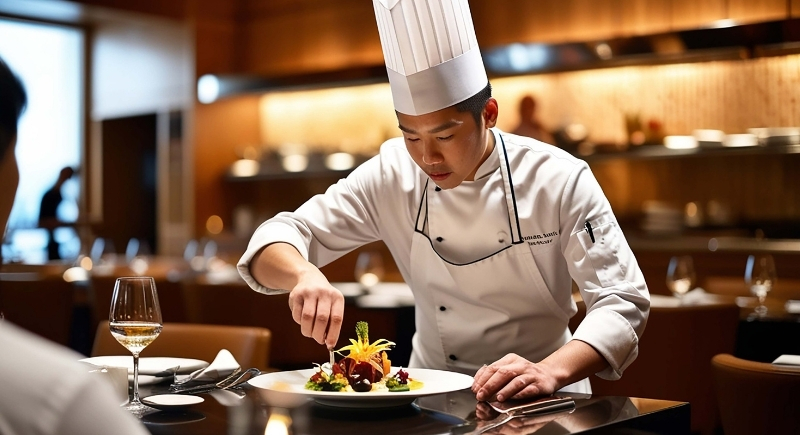
Image via Canva/SUMALI IBNU CHAMID
Formal restaurants operate on shared signals; table settings, plating style, and service cues exist to guide behavior without awkward instruction. When a restaurant expects you to use utensils, they are provided, and when hands make sense, tools are taken away. Bread remains the clearest example. A bread plate, butter dish, and knife signal that bread belongs in the hands, broken into small pieces and buttered one bite at a time. Canapés and petits fours follow the same logic. Bite-sized items designed to travel cleanly to the mouth signal hand use by design.
Cuisine Shapes the Rules
Certain cuisines preserve long-standing traditions even inside upscale rooms. Sushi is a good example. Nigiri traditionally works well with fingers, provided restraint stays intact. Excess soy sauce or oversized bites immediately break the rhythm.
Western fine dining draws firmer lines. Fries, grilled asparagus, and crisp vegetables may be served plain, allowing for hand use. When sauce is added, the expectation changes instantly.
The Importance of Technique
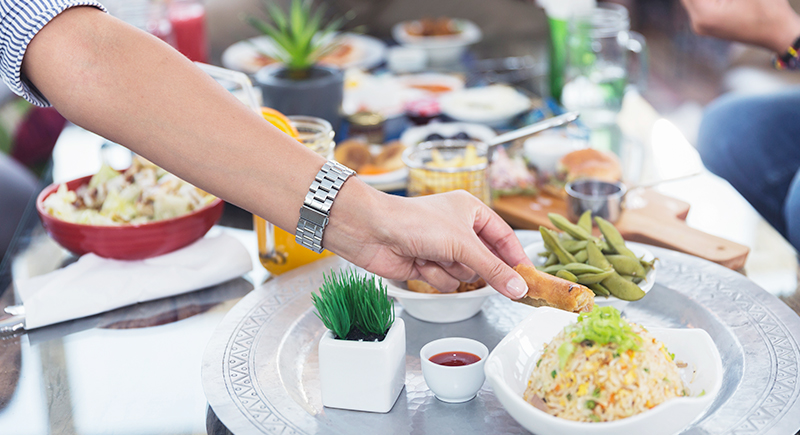
Image via iStockphoto/GCShutter
Eating with hands carries a technique, especially in formal settings. Only fingertips touch food. The thumb guides the bite, the palms stay clean, and one bite happens at a time. Large mouthfuls can quickly attract attention.
Napkins also work here. Light dabbing replaces wiping, and fingers stay tidy between bites. Licking fingers never belongs inside fine dining spaces, regardless of cuisine or comfort level. These rules mirror global hand-eating traditions that prize control and grace over speed or enthusiasm.
Is Comfort a Priority in Modern Etiquette?
Contemporary etiquette prioritizes guest ease, and restaurants share responsibility for clarity. Kitchen designers design dishes that match the room, and service teams supply the right tools at the right moment. Guests respond by following cues instead of improvising.
When diners hesitate, a glance at neighboring tables often provides confirmation. Fine dining thrives on shared rhythm. Observing the room aligns behavior without embarrassment.