How People Settled Arguments Before Google Was Invented
It’s hard to imagine now, but people managed disagreements long before search engines existed. If two friends argued about who starred in a movie, what year an event happened, or whether carrots really improve eyesight, there was no instant answer in their pocket.
Instead, they relied on memory, reference books, newspapers, libraries, or someone they trusted to know the facts. Before Google launched in 1998, settling an argument required access to information, time to look it up, and often a bit of patience.
The Encyclopedia Was the Household Referee
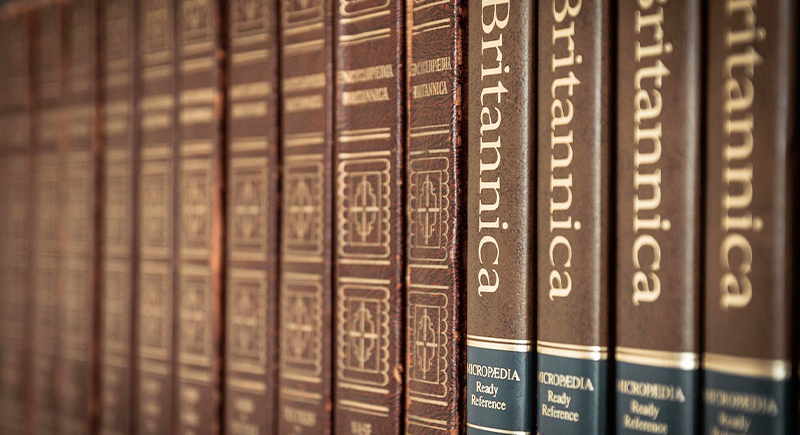
Image via Pixabay/jarmoluk
For much of the 20th century, encyclopedias were the closest thing to a final ruling in many homes. Multi-volume sets like Encyclopaedia Britannica lined bookshelves and were referenced during heated dinner-table debates. If voices rose high enough, someone retrieved the appropriate volume, scanned the index, and located the entry in question.
Of course, it took time and required ownership. Encyclopedias were costly, and not every family had a set. Public libraries filled the gap, but that meant postponing resolution until the next visit.
The information inside was edited and reviewed, but frozen at the time of publication. A 1985 edition reflected 1985 knowledge. Updates arrived only with new printings. Even so, pointing to a printed entry usually ended the conversation.
Librarians as the Original Research Guides

Image via Canva/Comstock Images
When the bookshelf fell short, people turned to librarians. The New York Public Library has preserved notecards from the 1940s through the 1980s documenting questions asked in person and by phone. Patrons called about historical events, science topics, etiquette rules, and nearly everything in between. Reference librarians directed patrons to credible sources, explained context, and clarified confusion.
Newspapers, Almanacs, and the Evening News
Disputes about current events relied heavily on newspapers. If an argument centered on election results, sports scores, or world affairs, the next morning’s paper often provided the answer. Television news also influenced public understanding during an era when a handful of networks dominated the airwaves.
Almanacs served as compact reference guides packed with dates, records, and statistics. Many families kept a copy nearby specifically for settling small factual debates.
Asking Someone Who Was Supposed to Know

Image via Getty Images/LightFieldStudios
Institutions were not the only authorities. Teachers, clergy members, doctors, and older relatives often stepped in as judges. A disagreement might end with, “Ask your teacher tomorrow,” or “Call your uncle, he’ll know.”
Credibility frequently rested on reputation and confidence. If someone spoke with enough certainty, others often accepted it.
This dynamic helps explain why certain myths remained for decades. Claims about health, history, or everyday science sometimes went unchallenged because confirming or disproving them required effort.
When the Internet Arrived Without Google
By the mid-1990s, the internet existed, but Google had not yet become dominant. Early search tools such as Yahoo Directory, AltaVista, Lycos, and Ask Jeeves attempted to organize a rapidly expanding web.
Yahoo launched in 1994 as a human-curated directory. A year later, AltaVista arrived with keyword search capabilities. Ask Jeeves appeared in 1996, inviting users to type questions in plain language.
Getting online was slow. Dial-up connections tied up phone lines, and search results lacked the ranking sophistication later introduced by Google’s PageRank algorithm, developed by Larry Page and Sergey Brin at Stanford University in 1998.
Even online, finding a definitive answer required navigating clunky interfaces and evaluating scattered sources. Google streamlined access and dramatically reduced the time between question and answer. It’s the reason why resolving a dispute today means opening a browser and sifting through results in seconds.