Chocolate Digestives Only Exist Because of a Historical Epidemic
Legend has it that in the 1800s, widespread digestive disorders in Britain prompted physicians and bakers to focus on remedies for stomach discomfort. Sodium bicarbonate gained attention as a potential aid, and it soon appeared in biscuit recipes, combined with whole wheat flour. This surge of interest marked the starting point for what became the digestive biscuit.
Decades later, the same product line expanded into chocolate-covered versions that owe their existence to the original health-driven formulas created during that period. The idea was to mix whole wheat with baking soda, keep the sugar low, and create a biscuit people could enjoy while feeling like they were doing something good for their health.
This belief didn’t hold up once people realized the baking process neutralized most of the effect. Still, the public clung to the concept, and the name stuck.
The Recipe That Turned A Remedy Into A Staple
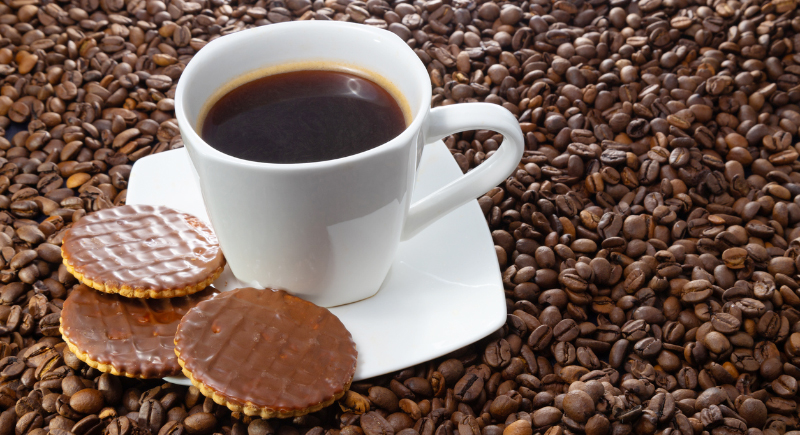
Image via iStockphoto/Iwona Wozniak
The digestive biscuit, created by Alexander Grant in the late 1800s, assumed its familiar form due to a Scottish recipe centered on whole wheat flour, malt flavor, and sodium bicarbonate. The combination produced a mild sweetness, a grainy snap, and a texture that was somewhere between cookie and cracker.
People found endless uses for it. They paired it with tea or coffee, topped it with cheese, or crushed it into cheesecake bases. Some even used it as a substitute for bread. That versatility allowed the biscuit to settle into British life.
Sales reflected that shift. The biscuit grew into a national favorite, and production scaled quickly. Decades later, the biscuit still moves tens of millions of packets each year in the United Kingdom. Demand continued to grow, and innovation followed.
A Health-Inspired Biscuit Becomes A Chocolate Icon
The chocolate digestive arrived in the 1920s after bakers recognized that the biscuit’s steady popularity could support more indulgent versions. They coated only one side, keeping the original structure intact. This single decision created a cultural debate that still appears in British snack conversations. Some prefer the chocolate touching the tongue first. Others argue the biscuit side provides better grip.
Chocolate varieties expanded into milk, dark, white, and even caramel-coated versions. Smaller bite-sized releases followed as snacking habits changed. These minis offered convenience for school bags, office drawers, and quick grabs during busy days.
An Unexpected Global Twist
Image via iStockphoto/Coldsnowstorm
While digestives became household staples across the UK and Australia, the American market never fully embraced them. They appear in international aisles, not the main cookie section. American shoppers who discover them often compare the taste to graham crackers. Digestives are thicker, with a nuttier profile and a softer crumble. Graham crackers are sweeter, with honey and cinnamon notes.
The comparison helps explain why digestives remain popular as bases for caramel slices, pie crusts, and ice cream sandwiches. Their structure handles toppings without falling apart.